Saturday, March 8, 2008

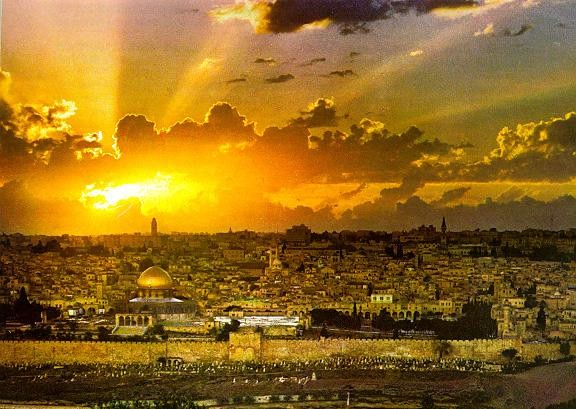
New Palestine


Red and dark sky
the door bell is ringing, silence
a soldier and a small kiddo are standing behind it
but only one of them is real...

Children are screaming in agony
mothers are falling in despair
houses are torn down
this is the 21st massacared Palestine

The door is opened
the soldier comes in
tired from all the fired gun shots
the kiddo goes to the kitchen
it all seemed to him new

exhausted mothers walk together
holding pictures of that small kiddo
with pain, anxiety and desperate looks
but with pride, dignity and heroism

Our kiddo thanks the soldier
for so he helped him to go to paradise
for so he made Paradise our new Palestine
filled with innocent looks and honest hearts

Thats our new Palestine
from there comes our support
we will not give up
you will not be forgotten

Thursday, January 10, 2008

European "Democracy"

Words can be loaded
Who knew being a polyglot could get you in trouble even when you’re the pope? When Pope Benedict XVI gave Christmas greetings Dec. 25 to Rome and the world in 63 languages, one of those idioms turned out to be a mini-minefield.
A former government minister and now
head of Greece’s small Democratic Revival party reportedly sent a critical missive to the pope for giving Christmas well-wishes in Macedonian. The Italian news agency ANSA reported yesterday it had obtained a copy of the two-and-a-half-page typed letter the Greek politician sent to the German pontiff.
Apparently the letter admonished the pope for using
Macedonian which, the author asserted, is not a language but a Slavic dialect. The letter, according to ANSA, reportedly gives numerous reasons this Cyrillic-lettered lingo does not exist.
But a quick search on the Vatican Web site shows papal season’s greetings were given in Macedonian every year going back
at least until 1997.
ANSA attributes the critique as just the latest sparring resulting from this Balkan nation’s use of the name
Macedonia since it gained independence from Yugoslavia in 1991. Greece objects to this landlocked state north of Greece taking the name Macedonia for a variety of reasons, including the fear Skopje might have territorial claims on Greek Macedonia. You can read about the complex name controversy here.

Sunday, December 2, 2007

"LOST" in Palestine


" In may1948 an airplane there was a plane flying on the relation Switzerland - Dubai with flight number 815 suddenly experienced strong turbulance in the desert of Arabia..decided to go back but lost track, but the turbulance went even stronger.. and the tail of the plane got torn out and the air plane crashed on a mountain named "Sion"...


Everything happens for a reason... so the survivors of this plane crash decided to keep themselves alive till the "forign" aid comes to rescue them.. but yet somehow no one comes.. as if everyone is happy for this plane crash.. so they decided to find their out of this mountain..and survive.. it was wild.. and misterious but some how Devine! These survivors were from different ethnicities.. but yet their paths crossed on this flight "on purpose" ?


But unfortunately (to the survivors) they weren't alone on this mountain.. they shared it with the "Others" .. looking for a way to survive their attacks they dig a whole in the mountain and found a tunnel filled with money and weapons to be used against the "Others"...


Later on those survivors found out that they aren't the only survivors.. so they gather up from all over the mountain and start their own community and quazi state.. "


Is it really that simple as my own version of LOST suggests..? Does really everything happens for a reason? Does justice work this way? Does the Occupation of Palestine in 1948 and later in 1967 happened for a reason..?

What happend to all the refugees from Palestine who lost their homes, their soverentiy, their dignity just because its destiny? Is it fair to put all the palestinians in what i can only describe as a huge jail with enourmously long and tall wall..? will the death of all the martyrs for free Palestine be someday justified to the humanity?


Can we really consider someday to have two states Palestinian and Israeli living side by side peacefully as the lastest Annapolis conference suggested? i truely wonder..


Some may wait and see what will happen in Season 4 which you should expect it soon on the Island TV... with their popcorn in their lap and watch a good action movie.. but others like me will look for a way to share the truth of an occupied Palestine with the whole world.. to declare war agains Israeli terrorism.. and stop the apartheid in the west bank. Stop watching the reality from outside and lets us all together work and contribute in the most civilised way to the Freedom of Palestine.. peace in the middle east.. better tomorrow for all the Palestinian children..


Long live Palestine... and may Peace be up on all of us till the end of days


Imagine all the countries...

Following the Greek practise..
Can you imagine UN and EU to be persuaded by…
Mexico - to use the reference the Former British Colonies of United States of America for the USA, because the "America" part of the regular name implies territorial pretensions to the whole geographical area of America?

DR Congo - to use the reference the Former French Colony of Central Africa for the Central African Republic, because the "Africa" part of the regular name implies territorial pretensions to the whole geographical area of Africa?

USA - to use the reference the Former Spanish Colony of Mexico for the United Mexican States, because the "Mexico" part of the regular name implies territorial pretensions to south-western state of New Mexico?

USA - to use the reference the Former Soviet Republic of Georgia for the Republic of Georgia, because the "Georgia" part of the regular name implies territorial pretensions to their southern state of Georgia?

Azerbaijan - to use the reference the Former Ottoman Possession of Albania for the Republic of Albania, because the "Albania" part of the regular name implies territorial pretensions to the geographical region with that name in the Caucasus?

Macedonia - to use the reference the Former Yugoslav Republic of Montenegro for the Republic of Montenegro, because the "Montenegro" (in original: Crna Gora) part of the regular name implies territorial pretensions to the Macedonian region of Crna Gora Mountain?

Sweden - to use the reference the Former Russian Province of Finland for the Republic of Finland, because of the claim that Santa Claus is the "most famous Finn," while Sweden considers this cultural figure as its own?

France – to use the reference the Former Norman Possession of Great Britain for the United Kingdom of Great Britain and Northern Ireland, because the "Britain" part of the regular name implies territorial pretensions to the geographical area of Bretagne?

Russia – to use the reference the Former Ottoman Possession of Bulgaria for the Republic of Bulgaria, because the "Bulgaria" part of the regular name implies territorial pretensions to the geographical area covered by the historical country with the same name along Volga River?

Macedonia – to use the reference the Former Yugoslav Republic of for Slovenia, Croatia, Bosnia and Herzegovina, Montenegro, and Serbia, because all of them were indeed republics in former Yugoslav federation, and it's unfair only one of them to carry this identity burden.

No?

Then please raise your voice against the continuous discriminatory use of the "temporary" reference the Former Yugoslav Republic of Macedonia by both UN and EU when they refer to Republic of Macedonia. Help putting and end to the surreally ridiculous, but very damaging "name dispute" instigated by Greece.
all rights reserved to the author of mkvoice.

Monday, November 26, 2007

Greek Sensitivity... and a weird myth

Nov 22nd 2007
From Economist.com


FOR anyone who cares about peace in the Balkans, few things matter more than keeping intact the country most of the world calls the “Republic of Macedonia”. Its perilous stability will wobble more with looming independence for next-door Kosovo, which will delight Macedonia’s Albanian minority, and stoke the Slav majority’s fears.

In theory, no rich country should care more about Macedonia than neighbouring Greece. Yet relations are hampered by an arcane dispute about nomenclature. Greece insists that “Macedonia” was, is and can only be part of Greece. The name’s use by a region of Yugoslavia was, it maintains, part of a communist-era plot aimed at destabilising Greece. Greece therefore insists that the country be called “Former Yugoslav Republic of Macedonia” (FYROM).

Extremists on both sides use rhetoric (seen, among other places, in clumsily made presentations on YouTube) so ill-phrased and comical that Borat himself could claim authorship. They share the unspoken but absurd assumption that the features of the entity known as Macedonia in ancient history should be of decisive importance in modern ethnography or political geography: because an ancient kingdom called Macedonia existed, only one modern entity can claim that name. The region is still waiting for a statesman to pick that assumption apart

Greek twitchiness about even mythical controversies was more understandable in the early 1990s, when the whole future of the southern Balkans was alarmingly fluid and unpredictable. Amid disputes over Macedonia’s future involving Serbs, Albanians and Bulgarians, the Greek objection to the name was part of a wider pattern of worries about borders and minorities.

But the Macedonian nuts have little effect on their government’s policy these days. The country has changed its flag and constitution in order to accommodate Greek sensitivities. The forward-looking government in Skopje is into flat taxes, e-government and attracting foreign investment (paradoxically, in large measure from Greece).Greece, however, still insists that the mere existence of a next-door country called Macedonia “is directed against the cultural heritage and historical identity of the Greeks” and “there is no question of its neighbour acceding either to the European Union or to NATO under the name Republic of Macedonia”.A lobby group called the “Association of Macedonians” has issued an appeal this week noting that Greece does not fully recognise Macedonian passports and that Macedonia’s state airline cannot fly to Greek airports. That, they say, adds insult to injury.

Slavophone people in northern Greece have had a tough time, not only with mass deportations in 1949 but also in their treatment by the authorities on issues such as surnames and schooling ever since. (Greeks saw the slavophone minority, with some justice, as a security threat during the Cold War, and Greek minorities have been abominably treated too in other countries. But even multiple wrongs don’t make a right). The great tide of EU and NATO expansion that has served the continent so well in the past ten years is already running worryingly slack. Pushing ahead with Macedonia’s applications to both bodies will change the mood in the whole region. Prosperity and stability in the Balkans will benefit Greece hugely. It is time to relegate the name issue to the backwaters of bilateral diplomacy, and highlight the benefits to Greece of Macedonia’s stability and prosperity—and the dangers of its disintegration.
all righst reserved "The Economist"